
Benedict’s Law: Mandatory Allergy Safety Guidance in Schools
A truly historic moment has been reached for children with allergies and their families. The Government has committed to publishing new mandatory statutory guidance on allergy safety in schools, due to come into force from September 2026. This guidance will require schools to have robust allergy policies, trained staff, and access to emergency medication, protections that allergy families have been calling for for years.
This breakthrough follows powerful cross-party support in the House of Lords for Benedict’s Law, a campaign to make schools safer for children with food allergies. As peers prepare to debate and vote on a landmark amendment to the Children’s Wellbeing and Schools Bill, the Government’s commitment signals real momentum and real change for school allergy safety in England.
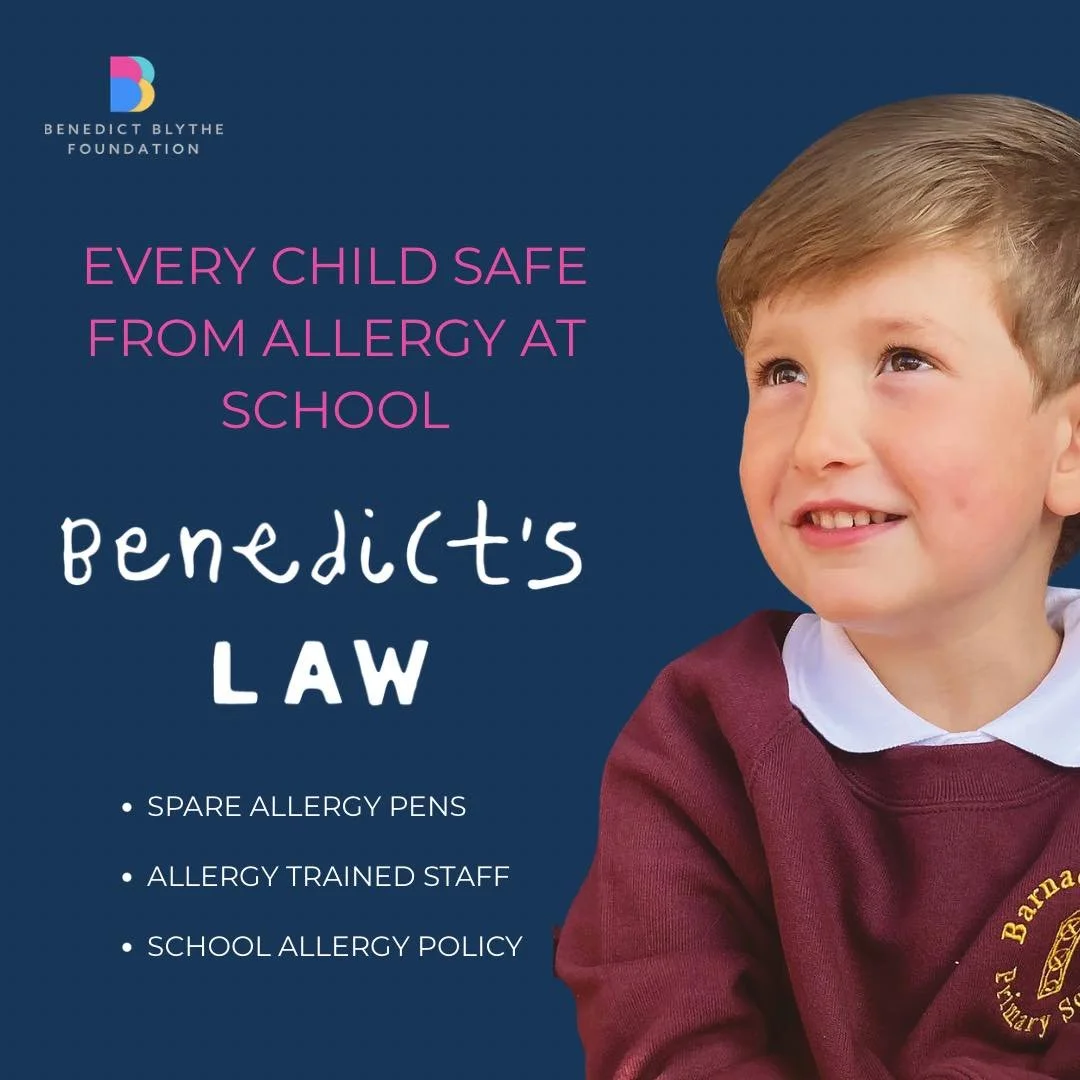
Benedict Blythe Foundation
What is Benedict’s Law?
Benedict’s Law is a campaign to improve allergy safety in schools by ensuring consistent, life-saving protections for children with food allergies and anaphylaxis. It is named in memory of five-year-old Benedict Blythe, who tragically died from anaphylaxis at school in 2021 after being mistakenly given milk, to which he had a known allergy.
Since his death, Benedict’s mother, Helen Blythe, has worked tirelessly alongside allergy charities, government officials and members of the National Allergy Strategy Group to push for urgent, practical change so no other family has to experience the same devastating loss.
What will the new school allergy guidance include?
The new statutory allergy guidance for schools, being developed by the Department for Education, is intended to deliver core, life-saving protections, including:
Clear, whole-school allergy policies
Comprehensive allergy and anaphylaxis training for school staff
Access to spare emergency adrenaline auto-injectors (AAIs)
Individual care plans and allergy action plans for pupils with food allergies
Schools will be expected to follow this guidance. In practice, this means safer classrooms, better-prepared staff, and a more consistent approach to protecting children with food allergies wherever they go to school in England.
This is a major step away from the postcode lottery that has left too many families exposed to avoidable risk.
Why allergy safety in schools matters

Food allergies in children affect hundreds of thousands of pupils
Food allergies in children affect hundreds of thousands of pupils across England, and schools are recognised as one of the most common settings for first-time severe allergic reactions outside the home.
Clinicians warn that:
Delays in recognising the symptoms of anaphylaxis
Lack of staff training
Inconsistent access to emergency medication remain critical factors putting children at serious risk.
Strong, mandatory school allergy guidance and ultimately strong law is essential to prevent avoidable hospitalisations and deaths.
Guidance is essential but law matters too

Benedict’s Law is a milestone for allergy safety
While statutory guidance is a huge and welcome step forward, we alongside many clinicians and charities continue to believe that placing these protections in law is the strongest way to guarantee consistent, universal implementation.
The Lords amendment to the Children’s Wellbeing and Schools Bill would place a legal duty on schools to:
Hold accessible spare adrenaline auto-injectors
Ensure staff receive allergy awareness and emergency response training
Implement individual allergy action plans
Adopt and publish a whole-school allergy policy
With both legislative action and statutory guidance now on the table, England is closer than ever to delivering the full promise of Benedict’s Law and making schools safer for every child with allergies.
A victory born from community, courage and persistence

School should be safe for every child
We welcome the Government’s commitment and the leadership shown by Minister Bailey and Baroness Smith of Malvern in addressing long-standing gaps in school allergy safety.
We also celebrate this milestone with Benedict’s family, medical experts, charity leaders, and our incredible allergic community, who refused to let this issue be ignored.
It is tragic that it has taken the loss of a child and the tireless campaigning of a mother for real change to happen, but today Benedict’s legacy is a victory for every child with allergies.
For every family living with food allergy, and for every parent sending their child to school hoping they will be safe, this is a moment of real progress and renewed hope.
How Allergy School supports schools to meet the new guidance
At Natasha’s Foundation, we created Allergy School to help schools confidently meet their responsibilities and protect pupils with allergies.

Allergy School is helping schools get compliant for Benedict’s Law
Allergy School offers schools:
A FREE, expert-led self-assessment tool to help schools review and strengthen allergy safety
Evidence-based best practice guidance developed with leading clinicians and partners
Certified online allergy and anaphylaxis training for school staff, created with leading first aid charity St John Ambulance
DfE-endorsed lesson plans and classroom resources, mapped to the curriculum and ready to teach
Practical resources to support the development of strong allergy policies and individual care plans
As the new statutory allergy guidance comes into force, Allergy School provides FREE practical, trusted support to help schools implement these protections effectively and consistently.
Frequently Asked Questions (FAQ)
What is Benedict’s Law?
Benedict’s Law is a campaign to improve allergy safety in schools by making life-saving protections mandatory, following the death of Benedict Blythe from anaphylaxis at school.
When will the new school allergy guidance come into force?
The Department for Education has committed to introducing mandatory statutory allergy guidance for schools in September 2026 in England.
Will all schools have to follow the guidance?
Yes. Schools in England will be expected to follow the new statutory guidance on allergy safety, including training, policies and access to emergency medication.
What protections will schools need to put in place?
Schools will need to have clear allergy policies, trained staff, spare adrenaline auto-injectors, and individual allergy action plans for pupils.
Why is allergy safety in schools important?
Schools are one of the most common settings for first-time severe allergic reactions. Strong policies and training save lives and prevent avoidable hospitalisations.